
The Different Tools to Configure and Control a RAIN RFID Reader
This article looks at the common software tools available to configure and control a reader. There is overlap between these tools, but each is also suited for different scenarios.
The general idea is that a user must configure his/her reader for a specific application and environment. Which population(s) of tags am I looking for? How much time do I have to read the tags? Will there be other tags in the read-zone? Do I want to broadcast with high or low power? What polling interval do I want? Etc. To initially configure the reader and then subsequently control or modify it in the field, some mix of the following tools is generally available from the reader manufacturer:
-
Support for LLRP: LLRP stands for Low Level Reader Protocol. It is an official GS1 standard. It “specifies an interface between RFID readers and clients. The interface protocol is called low-level because it provides full control of RFID air interface protocol operation timing and access to all the parameters of each Gen2 command.” It is meant to be device-independent, provides a fine level of control of the reader and utilizes binary messages over TCP/IP. Think of it as an interface to the reader which allows external software to configure and control the reader. Note: Support for LLRP in a reader is a matter of degree; more or fewer “messages” can be supported. As a result of feedback from the field, TSC Bluebird recently expanded our support for LLRP to cover all LLRP messages.
-
A proprietary API (Application Programming Interface): Although users could use LLRP, some people find it difficult to master and/or not adequately supported for a particular reader. Reader companies therefore generally offer a proprietary API to support the same functionalities as LLRP. The drawback of this approach is that each manufacturer’s API is proprietary, so software developers either need to learn all relevant APIs or limit the number of reader manufacturers that their software works with. On the positive side, communicating with a reader over a proprietary API uses existing, standard software development skills and is generally considered more intuitive than LLRP.
-
A proprietary SDK (Software Development Kit): SDKs for readers are essentially pre-coded snippets, tools, functionalities, etc. that are built on top of the manufacturer’s API. Reader manufacturers know that most developers will want to do basic tasks like set the Read power, so the manufacturers include code to do these common tasks in their SDK via the API.
-
Reader webpage: Some readers support a connection over TCP/IP that allows users to configure and control the reader via a browser. TSC Bluebird readers support this as part of our “Bluebird Fixed Reader Middleware Software” suite. Open a browser, enter the IP address of the reader, and you will see numerous controls and settings that can be modified directly in the browser and sent to the reader.
-
RAIN Communication Interface (RCI): RCI has been developed by the RAIN Alliance’s Developers’ Workgroup within the How-To Community. From an outcome perspective, it is very similar to LLRP and, just like LLRP, meant to be universal across all reader brands. But that’s where the similarities end. RCI for RAIN is analogous to HTML for the Web. RCI hides the technical plumbing and presents applications with meaningful, easy-to-understand JSON objects instead of bits and bytes. LLRP exposes the low-level RAIN protocol and its complexities, making the application developer responsible for protocol details and tag data structures. RCI readers take care of their job – reading and reporting tag data – so developers can focus on solving business problems instead of becoming air interface protocol experts.
-
Onboard apps: Most handheld readers are delivered with various free software utilities and demo programs. Within these utilities and programs are capabilities to configure and control the reader – to a limited extent. For example, TSC Bluebird handheld readers ship with an app called BOS FastRead. Within BOS FastRead, a user can set power level, session, reader parameters for tag state and SL flag, and other relatively basic settings. Most of these onboard apps were originally developed by the manufacturers as demo apps, but an increasing number of end-users are opting to use the apps for their operations. Normally, these users ask for “one little tweak here, another little addition there,” so the apps are constantly expanding in capabilities and functionalities. A user recently asked TSC Bluebird to add Impinj’s Gen2X mode into our FastRead app, and now you will indeed find it there.
Upcoming Global Events
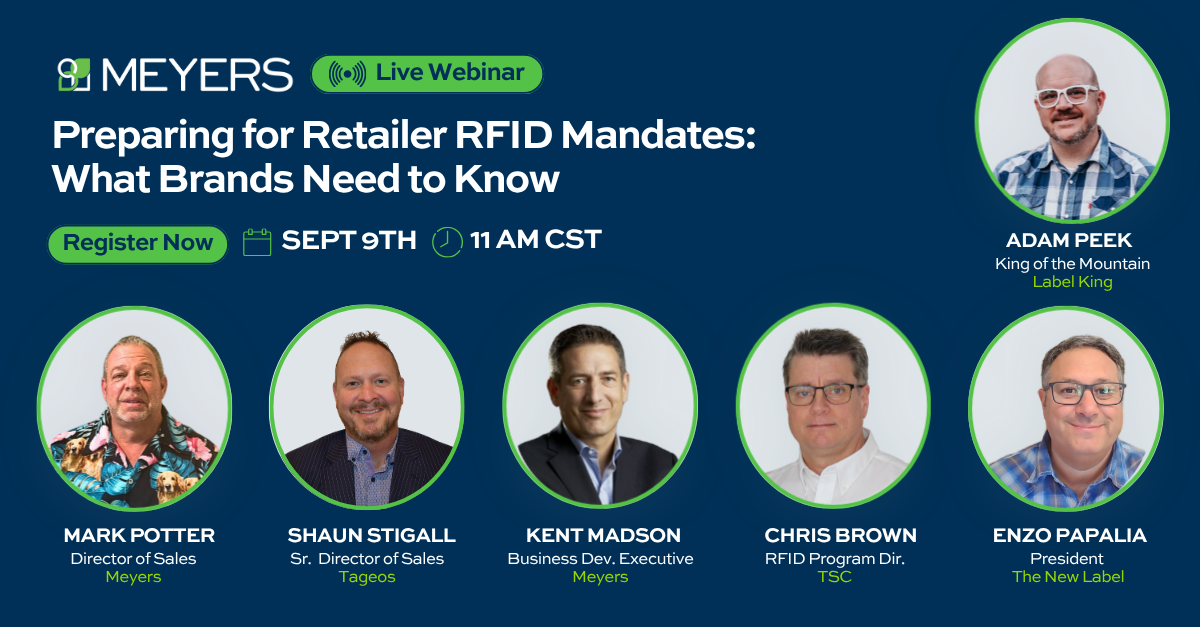
Preparing for Retailer RFID Mandates: What Brands Need to Know
Retailer RFID mandates are no longer a future consideration — they're a compliance deadline with real cost, labor, and encoding implications for every supplier in the chain. Join us on Wednesday, September 9 from 11:00 AM to 12:00 PM CT for a practical, no-fluff session built for brands navigating these requirements right now. We'll tackle the questions suppliers are actually asking: how to turn mandatory RFID tagging into a business advantage instead of a sunk cost, what SGTIN-96 encoding actually means and how to implement it correctly, and why Auburn University's RFID Lab has become a trusted authority shaping how these mandates are defined and validated industry-wide. Whether you're just starting to plan your tagging strategy or troubleshooting an existing rollout, this session will give you clarity and a path forward.
Auburn RFID Lab
The event will be “a full-day forum focused on advancing RFID-enabled supply chain visibility. This in-person-only event is being organized by the Auburn University RFID Lab and GS1 US and will bring together technology providers, end users, standards experts, researchers, and industry leaders to explore emerging applications and opportunities for RFID-driven supply chain visibility across multiple industries. The intent is to have a curated forum for industry influencers and leaders to come together and advance the ‘brilliant’ supply chain innovation that was presented at GS1 Connect in June.
The agenda includes industry presentations, technology demonstrations, breakout discussions, and hands-on experiences at the Auburn RFID Lab, with topics ranging from claims compliance and cargo security to related apparel, food, healthcare, and supply chain visibility initiatives.”

RAIN in Action – Madrid
RAIN in Action comes to Madrid, September 29 – October 1, 2026, for three days of end-user case studies, live technology demonstrations, and hands-on workshops covering the full scope of RAIN technology. If you deploy RAIN, specify RAIN, or are planning to, this is where the decisions get made.
IEEE 2027 Event
Mark your calendar! The IEEE, in collaboration with the University of Memphis’ Auto ID Lab, will host their annual RFID event June 14 – 17. The event will be held at the University of Memphis. Although the IEEE hosts an RFID event every year, the 2027 event will be different. A new RFID tradeshow will be launched and held to coincide with the conference. Many of you miss the now-halted RFID Journal LIVE! tradeshows, and this new event will be an attempt to fill the void. The RFID industry certainly needs a dedicated tradeshow.
TSC Solutions Tour 2026: On the Road.
The TSC Solutions Tour 2026 is underway, bringing our sales team, partners, and customers together across the US and Canada to explore solutions for real operational challenges — from RFID and thermal printing to mobile data capture. Each stop showcases how a connected AIDC ecosystem drives efficiency from the warehouse floor to the front office, with live product demos, food trucks, and hands-on conversation.
News
TSC joins Auburn Board
Effective July 1st, TSC is now a Board member for the Auburn University RFID Lab. Look for further information soon. Auburn will be hosting an event on September 22 and an in-person Board meeting the following day. If you would like more information about the event or Auburn’s RFID Lab in general, you are welcome to contact them a rfidlab@auburn.edu.
New, Updated and Improved Application Family Identifiers for ISO RFID Encodings
New and updated Application Family Identifiers (AFIs) from ISO: RFID encodings must be based on either the GS1 Numbering System or the ISO/IEC Numbering System - no exceptions. When the ISO Numbering System is used, an AFl is required as part of the encoding. For example, airline baggage tags use the ISO Numbering System with an AFI of C1 (hex). ISO recently added several new AFls and cleaned up some of the existing ones. As many RFID applications are closed-loop, there are a number of AFls that are ideal to cover closed-loop item tagging. If you would like more information about ISO encodings in general or the updates to the available AFls, please reach out to me, Chris Brown, at cbrown@tscus.com.
New ARC Spec E1
Auburn University’s RFID Lab has long had various “Specs” covering inlays that are approved for various purposes, primarily tagging of retail items. However, there has been a gap. Many retail items are metallic and/or packaged in non-RFID-friendly materials, which has made reading tags on these items challenging. Standard, traditional inlays have not performed well enough on these metal items. Think baking sheets, golf balls in metallic packaging, kitchen utensils, etc., and you can quickly understand the gap. Auburn has recently created a new ARC Spec E1 for inlays / tags that perform on metallic items. Keep your eye on this space as the major retailers begin mandating Spec E1 tags.
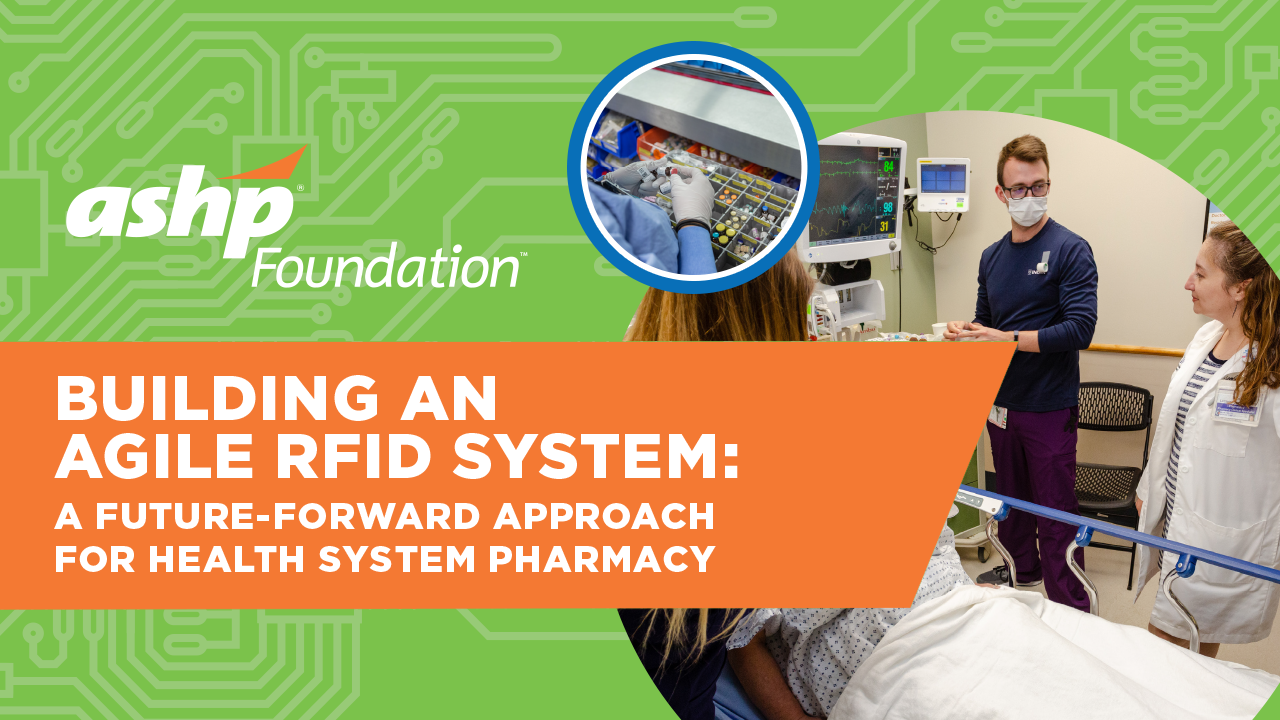
ASHP report on RFID for health-system pharmacies
The American Society of Health-System Pharmacists (ASHP) released a report on building safer, more effective health-system pharmacies by using RAIN RFID. Read how health-system pharmacies can leverage RFID to improve patient safety, increase efficiencies and future-proof their operations to support emerging traceability legislation.
TEKLYNX - Codesoft
TEKLYNX, developers of Codesoft label and RFID software, recently released a new version supporting GS1’s “++” encoding schemes. The ++ encoding schemes support encoding a Web URL directly into memory bank 01 (the main memory bank) of RAIN RFID tags using GS1’s Digital Link syntax. URLs encoded directly into the tag will help support the momentum towards item-level traceability. Complying with mandates and initiatives like DPP (Digital Product Passport), FSMA204, DSCSA, etc. becomes much easier when the URL is directly in the data carrier like RAIN, QR Code, and NFC.
RAIN Alliance Encoding Masterclass
RAIN Alliance Encoding Masterclass: Online and in-person options are available. Learn the fundamentals of properly encoding RAIN RFID tags. Don’t make mistakes that lead to “Tag Clutter” and poorly functioning implementations! Contact George Greenlee george@therainalliance.org, Head of Training at the RAIN Alliance to learn more.
Product Showcase
S10 RFID Handheld Reader
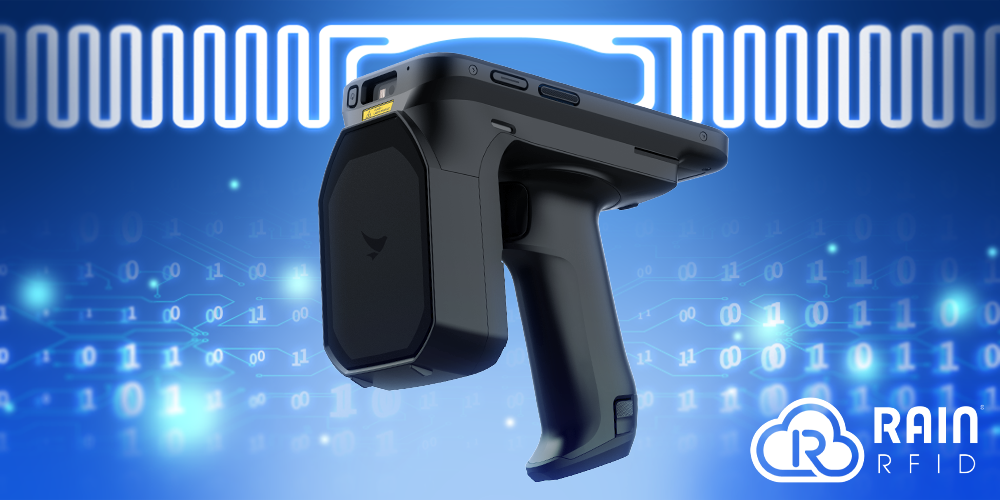
TSC continues to expand what's possible in mobile RFID capture. The all-in-one S10 RFID collapses mobile computing and long-range UHF RFID into a single device — delivering 1,300 tags/sec, 42+ ft read range, Gen2X-ready Impinj reader technology, and rugged durability built for a full shift on the warehouse floor.
TSC Auto ID's Newest RFID Blogs
-
Barcodes vs. RFID: What's Right for Your Operation in 2027? — Barcodes and RFID are both Auto-ID technologies used to track products, assets, and inventory across the supply chain. Both have their place — but the calculus is shifting. With the GS1 Sunrise 2027 deadline approaching, companies that haven't evaluated their barcode and RFID strategy are running out of runway.
-
Why Companies Need to Adopt RFID Now — The way the world identifies, tracks, and authenticates products is being rebuilt. Two forces are converging at once: the global retail and healthcare transition to 2D barcodes under GS1’s Sunrise 2027 initiative, and the accelerating shift to RAIN (UHF) RFID for item-level visibility
-
Navigating RFID Implementation: How to Overcome Three Common Challenges — Did you know that many industries, including retail, healthcare, logistics, and manufacturing, are increasingly adopting RFID technology? The driving force behind this is their desire to streamline operations with automated data collection and real-time visibility.
-
Success Story: RFID Modernizes Inventory Management, Enabling Market Expansion — A major Chinese variety store chain had to tackle the complexity of expanding into North America, the retailer turned to RFID technology and TSC Auto ID industrial RFID printers. Utilization of RFID enables bulk scanning to improve operational efficiency and reduce labor costs.
-
Success Story: Meet Retailer RFID Mandates with Cloud-Based Labeling Solutions — Retailers across the globe are driving the adoption of RFID technology by introducing mandates that suppliers must meet. Major companies like Walmart, Dick's Sporting Goods, and Macy's require products to be tagged with RFID labels.
-
Case Study: Weyco Steps Up to the Retail Challenge — Weyco, a leading distributor of men's footwear, faced a daunting task: printing millions of labels annually for a global customer base while maintaining peak efficiency and compliance. The solution? TSC Auto ID.
-
7 Reasons Why On-Metal RFID Tags Can Be Ideal For Asset Tracking — On-metal RFID tags are game-changers, offering unparalleled performance and versatility in even the most challenging environments. Whether you're managing a bustling repair facility, a high-tech IT department, or a rugged industrial factory, here are 7 reasons why on-metal RFID tags can serve you well for tagging difficult-to-read items.
-
The Supplier's Ultimate Guide to Retailer RFID Mandates: From Surviving to Thriving — As a supplier, we hope you are ready to begin applying RFID labels to your products for your retail customers. In this blog, we’ll detail the steps you need to follow to properly tag your items with RFID.